WoW Forever • Reference hub
The announced WoW Forever systems shape how characters progress, how groups play together, and how an account returns to Azeroth over time. This guide gathers the system topics in one place and separates what appeared in Blizzard’s presentation from details that still need confirmation or hands-on testing. Use it as a map into the deeper pages rather than as a claim that every interface or rule is final.
Start with the design goals
The combat-philosophy slide supplied for this project emphasizes simple, distinct classes, slower combat pacing, tactical group play, crowd control, and meaningful threat. Those points are useful lenses for reading the class and dungeon announcements: a change that looks small in a tooltip can alter how a party controls a pull or protects a healer. They are presentation themes, not a substitute for a finished spell list or tested encounter strategy. The linked class directory, class changes, and dungeons pages track those questions by topic.
Legacy: progression across characters
The Legacy presentation material describes a longer-term progression layer with challenges, choices, and a reward track. The supplied reward-track screenshot shows Legacy Points, unlock thresholds, and cosmetic examples; another slide groups Normal, PvP, Roleplay, and Hardcore as distinct play styles, with shared activity categories such as dungeons, raids, mail, the auction house, and outdoor play. Read those screens as a high-level map of the proposal. They do not, by themselves, answer every question about earning rates, account-wide eligibility, seasonal resets, or how rewards transfer between modes.
For planning, decide whether you want Legacy to support a main character, a roster of alts, or several different ways of playing. Keep cosmetic goals separate from power goals while the rules are still being clarified. Our Legacy guide collects confirmed details and open questions; the Hardcore page follows the higher-risk mode separately. Before committing time to a reward target, check the page’s source date and whether its claim comes from an official announcement, a test build, or an inference from a slide.
Campsites and the social loop
The presentation frames Camping as a new feature connected to shared activity and professions. The campsite screenshot below is a visual reference for where the idea fits: a pause between expeditions where players can regroup, prepare, and spend time together. The exact services, unlock conditions, and limits should be checked against Blizzard’s final implementation. We avoid describing a campsite as a guaranteed bank, auction house, or safe-zone feature unless an official source confirms it.
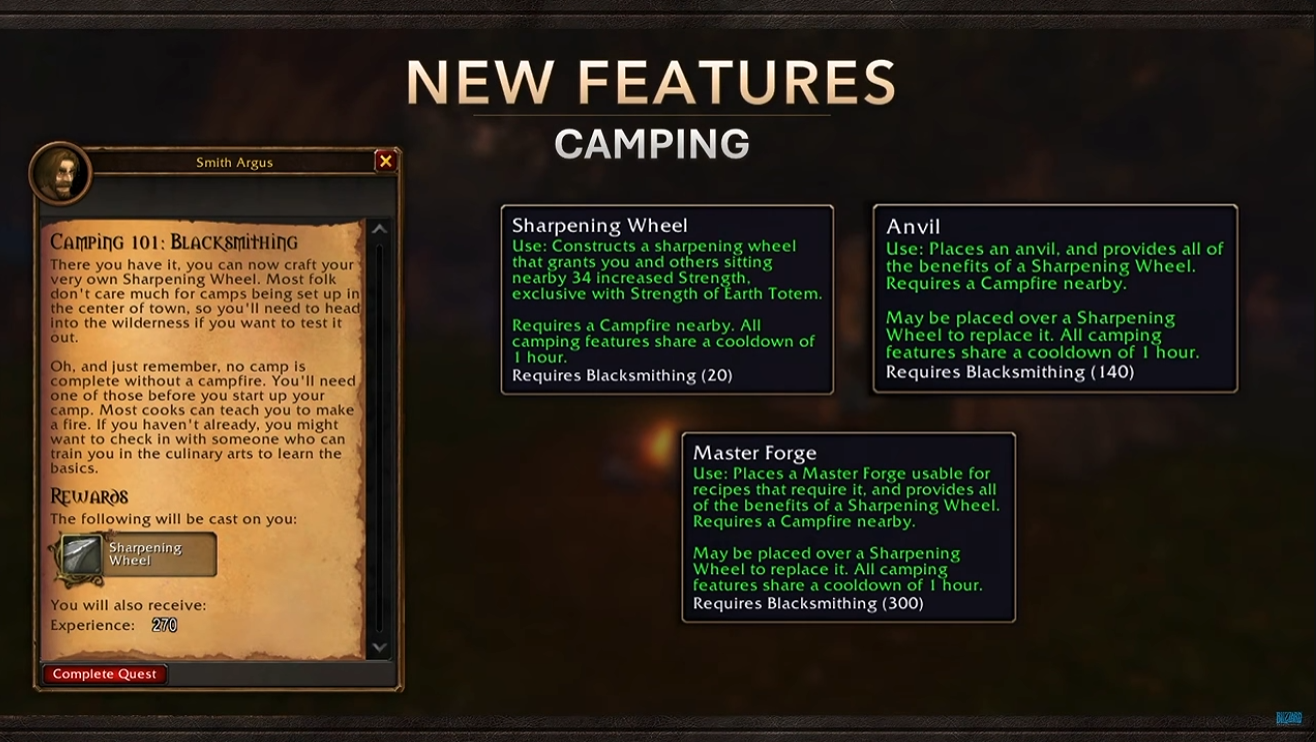
Use the Campsites page to follow what the feature offers, then compare it with professions when you are choosing an activity for a group. If the systems reward people for gathering, crafting, or preparing together, that can change how a guild plans its evenings even before anyone enters a dungeon. For now, treat that as a planning angle rather than a settled optimization rule.
Professions, appearance, and equipment
The talk screenshots below show trade-skill updates, alongside separate appearance and item-stat examples. These are precisely the kinds of changes where a slide can establish direction without answering every practical question. The profession material points readers toward gathering and crafting as a meaningful part of the experience; the transmog screens show appearance customization as its own topic; and the itemization screenshots call attention to familiar combat stats such as hit, critical strike, weapon skill, bonus healing, and expertise. Whether each stat appears on launch gear, how it scales, and which combinations are best all require specific item data.
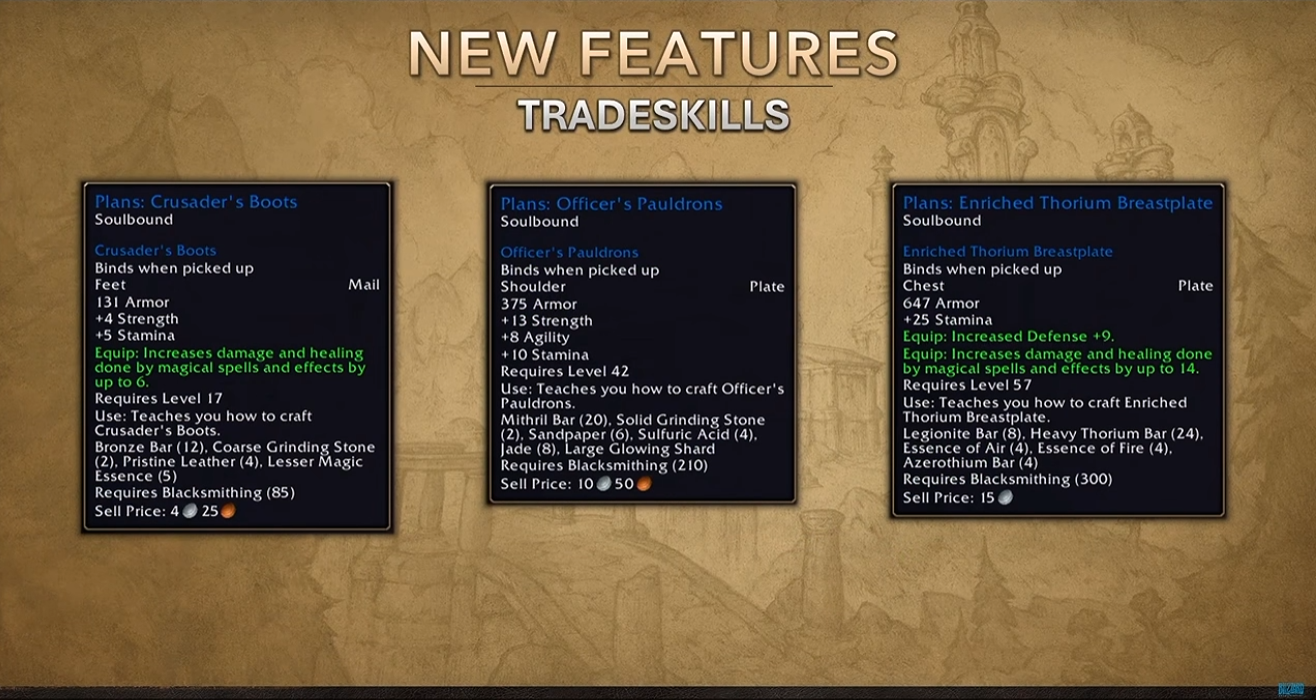
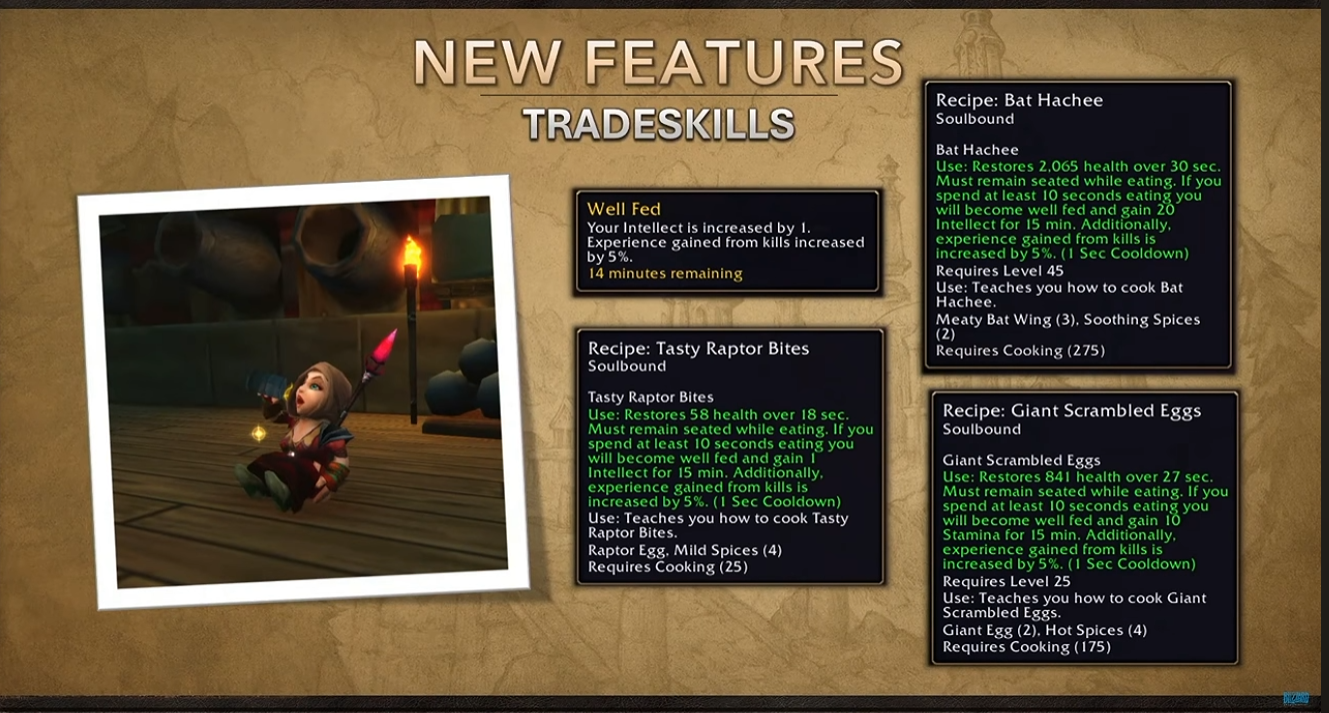
Use Professions for trade-skill changes, Transmog for appearance collection and customization, and Itemization for gear, stats, and loot. The character models page covers visual updates to player characters. As systems are tested, guides should distinguish what a screenshot shows from what a later build actually lets players do.
Server structure and technical foundations
The supplied server slides discuss infrastructure and update organization. The update-style diagram places Normal, PvP, Roleplay, and Hardcore alongside several kinds of activity; the infrastructure screenshot provides context for the technical work behind a persistent world. These visuals help explain the scope of the project, but they do not establish a complete server list, realm population limit, transfer policy, or service-level promise. Those details belong in a dated, attributable announcement before players make character or guild decisions around them.
For now, follow the official roadmap for announced milestones and this hub for system summaries. If you are returning with friends, agree on your preferred mode and play schedule first, then revisit the relevant pages as Blizzard publishes specifics. Avoid treating a diagram, early build, or community interpretation as a final rules document.
How AzerothPlus labels evidence
Officially announced means Blizzard has stated the feature or date in a written post or presentation. Shown in a presentation means the supplied talk screenshot depicts a concept or interface; it may still lack implementation details. Observed in beta requires a build and observation date. Open question marks something the available evidence does not resolve. This page was assembled from the project’s talk screenshots, reference report, and the official What’s Next panel recap. The official panel recording is the best place to recheck slide context.
Updated September 14, 2026. AzerothPlus is an independent publication and is not affiliated with or endorsed by Blizzard Entertainment. Warcraft names and artwork belong to their respective owners.